Call Center AI Software That Makes Life Easier

Running customer service the old way is exhausting. Agents answer the same questions hundreds of times, wait times get crazy, quality drops when things get busy. Call center AI software changed how support works, and teams using it can’t picture going back to doing everything manually.
Most centers still handle every single call with people. Same basic questions all day. Routine stuff eating up time that could go to complex problems. Burns people out fast.
What AI Software Does Different
- Traditional centers put humans on every call. Customer calls, waits in line, talks to whoever picks up. Person handles everything from simple password resets to complicated technical issues.
- Call center AI software splits work smarter. Easy repetitive questions? AI handles them start to finish. Tricky problems? Goes straight to the right specialist. Patterns worth noticing? AI flags them automatically.
- Stops wasting agent time on stuff that doesn’t need human brains.
Why Centers Want This
- Response speed jumps way up. AI answers common questions instantly instead of making people wait. Hours of operation, account info, basic troubleshooting – done immediately without humans involved.
- Agents stop getting fried. Not answering “what time do you close” for the millionth time makes work bearable. Focus on interesting problems needing real thinking.
- Customers get happier. Quick answers for simple stuff. Smart help for hard issues. Less holding. People get what they need faster.
- Everything stays consistent. AI gives correct answers every time. No difference based on which person someone gets or what kind of day they’re having.
- Costs drop over time. One AI handles volume needing multiple people. Not hiring more every time calls increase.
- Round the clock becomes real. AI doesn’t sleep or need breaks. Customers get help at 3am without paying overnight premiums.
Where AI Crushes It
- Basic support is perfect for AI. Common questions, simple fixes, info requests, AI destroys these. Frees humans for harder stuff.
- Routing gets way smarter. AI listens to what customers say and puts them with the right team immediately. No bouncing between four different people.
- Data entry happens by itself. AI grabs info from conversations and updates systems. Agents don’t waste half the call typing notes.
- Emotion detection catches issues. AI hears when customers are getting mad and can bump things up or alert supervisors. Problems handled before they explode.
- Quality checking runs constantly. Instead of managers sampling random calls, AI reviews everything and points out issues automatically.
- Follow-ups don’t get forgotten. AI schedules callbacks, sends emails confirming stuff, makes tickets. Nothing slips away.
What Good AI Systems Need
- Understanding normal speech matters. People don’t talk in keywords. They ramble and say things in different ways. AI needs to get what they mean.
- Switching to humans smoothly. When AI can’t help, moving to a person should be easy. Customers shouldn’t repeat their whole story again.
- Learning from conversations. Good systems improve over time. Learn new ways people ask things and get better at answering.
- Working with existing stuff. Your customer database, help system, phone setup, AI should connect with what you have. Ripping out everything isn’t realistic.
- Clear rules for escalating. AI needs to know when to grab a human. Complex stuff, angry customers, weird requests, hand those off quickly.
Industries Using This
- Retail uses it for tracking orders and returns. Customers check where packages are, start returns, ask about rules. AI handles most without agents.
- Banks handle account questions and basic tasks. Balance checks, reporting lost cards, moving money between accounts. AI manages routine banking while humans deal with fraud and complicated issues.
- Medical places schedule visits and answer basic questions. When can I come in? What should I bring? Is this covered? AI handles these while nurses deal with medical stuff.
- Tech support sorts problems first. AI walks through basic fixes. Can’t solve it? Sends to the tech team with all info already collected.
- Travel handles bookings and changes. Flight schedules, booking tweaks, baggage rules. AI processes simple stuff, agents handle messy itineraries.
Problems It Solves
- Repetition stops killing morale. Agents don’t answer identical questions endlessly. Work becomes less mind-numbing.
- Scaling makes sense. Handle way more calls without equally more chaos. Growth doesn’t mean proportionally bigger teams.
- Information gets captured better. AI documents everything automatically. Nothing relies on agents remembering to write notes.
- Training needs show up faster. AI spots patterns in what confuses customers or where agents struggle. Fix issues quicker.
- Availability expands without cost explosion. Offer support outside business hours without staffing multiple shifts.
Getting It Working
- Find your most repeated calls first. What gets asked constantly? Those are perfect for AI. Start there instead of trying to automate everything.
- Keep humans checking initially. Let AI suggest answers that agents approve. Build trust before going full auto.
- Train on real talks. Use your call recordings so AI learns how your customers speak and what they ask.
- Set clear limits. Define exactly when AI should hand off to humans. Better transferring too much at first than leaving customers frustrated.
- Watch what matters. Track if problems get solved, customers stay happy, calls get handled fast. See if AI helps or just complicates things.
- Get agent input constantly. They’ll say when AI helps and when it’s garbage. Use that for improving the system.
How Ezy Calls Approaches This
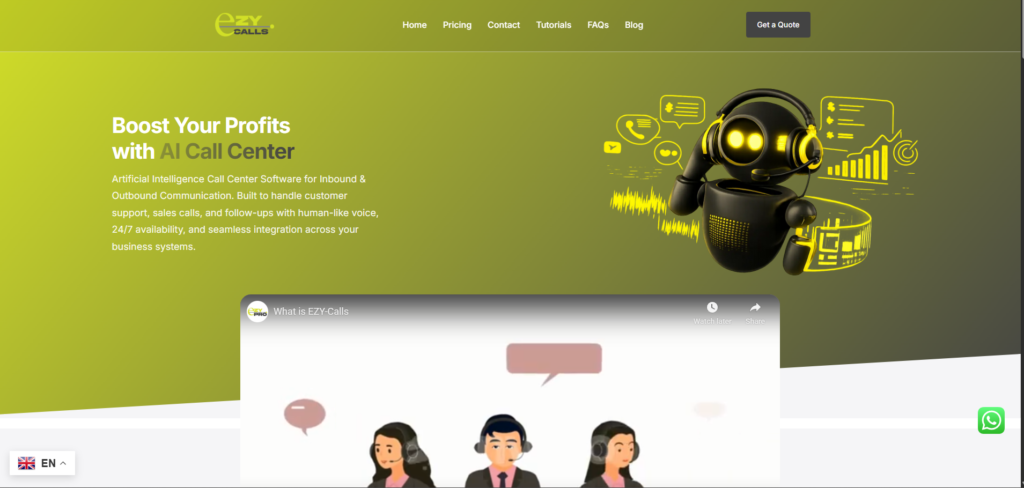
- Platforms like Ezy Calls build AI call tools for actual business use. Not just cool demos. Systems handling real messy customer talks.
- What makes Ezy Calls practical? Focus on problems centers deal with daily. Cut wait times, solve more on first contact, help agents work better. Skip hype, get results.
- For companies wanting better service without exploding budgets, tools like this work. Modern call abilities without needing enterprise money.
- Call center AI software isn’t replacing customer service people. It’s making them better at their jobs. Good AI handles boring repetitive junk so people focus on customers needing real help.
- Customers get faster service. Agents do more interesting work. Costs stay reasonable when volume grows. That’s the whole point.
Questions People Ask

Will AI take all call center jobs?
- Nah. AI handles routine stuff great but fails at complex emotional situations. Angry customer with a weird problem? Needs a person. Someone wanting empathy after a bad experience? Human touch matters. AI makes agents more productive, doesn’t erase them. Entry jobs shifted some, but the need for good agents using AI went way up.
How do people feel talking to AI?
- Mixed bag honestly. Quick simple questions? Most don’t care and want fast answers. Complicated problems or when they’re upset? I want a person. The trick is knowing when to use which. Good systems let people request humans easily without jumping through hoops.
What happens when AI gets confused?
- Should be sent to humans right away. Bad AI keeps trying and pisses people off. Good AI knows when it’s lost and escalates fast. Always have a clear path from AI to real agents for when stuff goes sideways. Also track where AI struggles most so you can improve those parts.