Call Center Monitoring Software Beyond Catching Mistakes
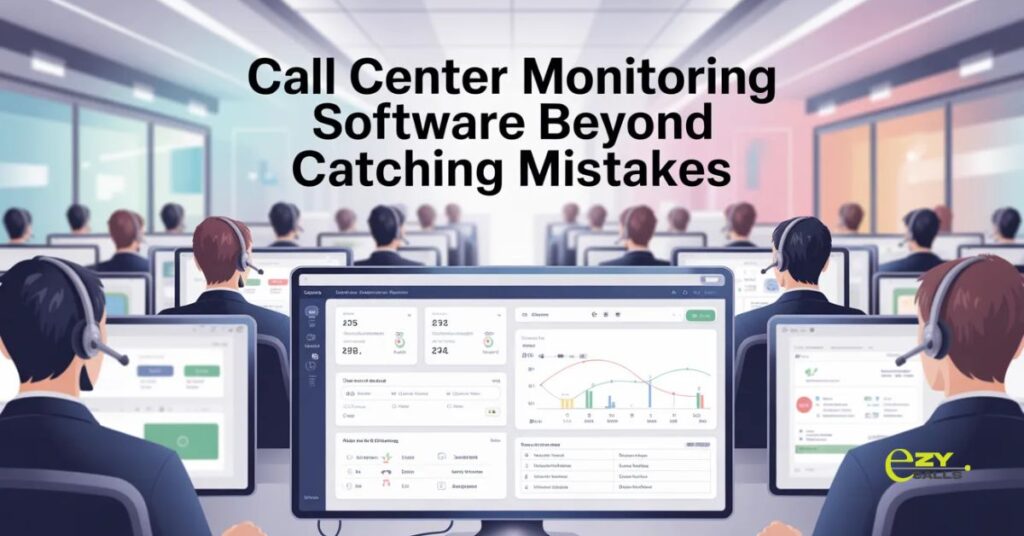
Monitoring shouldn’t just catch agents messing up. Best use is improving performance, identifying training needs, recognizing excellence. Call center monitoring software 2026 works when it helps teams get better, not just policy behavior, and managers using it right see quality improve without destroying morale.
Most supervisors approach monitoring as a surveillance exercise. Listen for mistakes, document problems, discipline failures. Creates fear not improvement.
What Monitoring Should Do
- The traditional approach treats monitoring as a gotcha tool. Random call sampling looking for policy violations. Agents never know when they’re being watched.
- Call center monitoring software enables systematic improvement. Every call captured, patterns identified, coaching opportunities recognized. Development focus instead of enforcement mindset.
- The difference between helping people improve versus catching them failing matters tremendously.
Why Smart Monitoring Helps
- Training needs to surface clearly. Three agents struggling with the same objection? Pattern visible in monitoring data. Address root issues, not individual failures.
- Quality stays consistent without micromanaging. Spot-checking shows trends. Don’t need to listen to every call when the system flags concerns automatically.
- Excellent performance gets recognized. Top performers doing great work often go unnoticed. Monitoring data reveals who’s crushing it deserving recognition.
- Customer issues get addressed faster. System flags frustrated customers or unresolved problems. Fix situations before they escalate to complaints.
- Compliance stays maintained systematically. Required disclosures, prohibited statements, regulatory requirements. Automated checking catches violations preventing legal problems.
- Coaching becomes specific, not vague. “Your handle time is high” versus “Here’s a specific call where you spent ten minutes on hold music.” Concrete examples drive improvement.
Essential Monitoring Capabilities
- Automatic call recording for review. Can’t improve what you can’t hear. Complete recordings not just random samples.
- Speech analytics identifying keywords. Detecting competitor mentions, compliance phrases, customer frustration. Automated flagging saves manual listening time.
- Quality scoring with consistency. Evaluate calls using standard criteria. Fair assessment across all agents not supervisor mood-dependent.
- Easy playback and sharing. Quick access to specific calls. Share examples in coaching without technical hassle.
- Performance dashboards showing trends. Individual and team metrics over time. Spot improvements or declines requiring attention.
- Agent self-review capabilities. Let people hear their own calls. Self-awareness improves performance better than constant supervision.
Different Monitoring Approaches
- Random sampling for overview. Listen to the percentage of calls getting general quality sense. Efficient but might miss specific issues.
- Targeted monitoring for concerns. Focus on new agents, recent complaints, specific situations. Concentrated attention where needed most.
- Peer review for development. Agents evaluate each other’s calls. Learning opportunity and fresh perspectives.
- Customer-triggered review. Negative surveys or complaints flag calls for review. Understand what went wrong from the customer perspective.
- Compliance-focused monitoring. Specific attention to regulatory requirements. Critical for regulated industries like finance or healthcare.
- Continuous automated analysis. AI reviewing every call for patterns. Scales beyond what manual monitoring achieves.
Making Monitoring Constructive
- Focus on development not discipline. Position monitoring as a growth tool. Punitive approach kills morale and encourages gaming metrics.
- Share positive examples regularly. Don’t only highlight mistakes. Recognize great calls, building confidence and setting standards.
- Give agents access to their recordings. Let them review their own performance. Self-reflection is more powerful than only supervisor feedback.
- Set clear expectations upfront. What gets monitored, how it’s evaluated, what standards matter. No surprises about assessment criteria.
- Coach immediately after reviewing. Fresh context makes feedback relevant. Don’t save it for quarterly review when nobody remembers specifics.
- Track improvement over time. Show progress recognizing development. People respond better seeing their growth versus only current shortcomings.
Common Monitoring Mistakes
- Over-monitoring creates paranoia. Watching every second makes people robotic. Balance oversight with autonomy.
- Only highlighting negatives. Constant criticism without recognition burns people out. Celebrate wins too.
- Ignoring context in evaluations. Judging calls without understanding the situation. Difficult customer or unusual circumstance changes assessment.
- Using monitoring primarily for discipline. Creates an adversarial relationship between agents and management. Fear doesn’t inspire excellence.
- Setting unrealistic standards. Expecting perfection on every call. Human beings make mistakes, focus on patterns not isolated incidents.
- Monitoring without acting on insights. Collecting data but not using it for improvement wastes everyone’s time.
Privacy and Legal Considerations
- Call recording notification requirements. Most places require informing customers. “This call may be recorded” isn’t optional.
- Agent awareness and consent. The team knows monitoring happens. Surprise surveillance creates legal and ethical problems.
- Data storage and retention. How long they keep recordings, who accesses them. Policies preventing misuse of recorded calls.
- Recording sensitive information. Payment details, health information, personal data. Special handling for protected information types.
- Usage restrictions on recordings. Coaching and quality purposes versus public sharing. Respect privacy even within an organization.
Technology Features Worth Having
- Integration with CRM showing context. See customer history during call review. Understand the full situation, not just the conversation snippet.
- Automated quality scoring. AI evaluating calls against criteria. Scales monitoring beyond manual capacity while maintaining consistency.
- Sentiment analysis detecting emotions. Identify frustrated customers or stressed agents. Early intervention prevents escalation.
- Searchable call transcripts. Find specific conversations or topics. Text search is faster than listening to hours of audio.
- Coaching workflow management. From identifying issues to delivering feedback to tracking follow-up. Structured improvement process.
- Mobile access for remote supervisors. Review calls from anywhere. Flexibility for distributed teams.
EZY CALLS Monitoring Philosophy
- Platforms like Ezy Calls build monitoring for improvement not enforcement. Tools helping teams get better rather than just documenting failures.
- What makes Ezy Calls different? Balance between oversight and development. Easy to use, focused on actionable insights, designed for constructive coaching not punitive surveillance.
- For call centers wanting quality improvement without fear-based culture, solutions like this work. Monitoring that actually helps agents succeed.
- Call center monitoring software 2026 succeeds when it drives performance improvement. Good monitoring helps people grow. Bad monitoring creates a toxic environment where everyone games the system.
- Better quality comes from development-focused monitoring. Tools should enable coaching, not just catch mistakes.
Questions About Monitoring
Won’t constant monitoring stress out agents?
- Depends how you use it. Monitoring for development reduces stress, people improve and feel confident. Monitoring for punishment creates anxiety.
How much monitoring is enough versus overkill?
- Sample 5-10 calls per agent monthly as baseline. New agents need more, experienced performers need less. Quality beats quantity always.
Should agents know when they’re being monitored?
- Yeah, transparency works better. People knowing monitoring happens keeps them consistent without paranoia. Secret monitoring destroys trust fast.