Artificial Intelligence Call Center 2026 Operations That Work
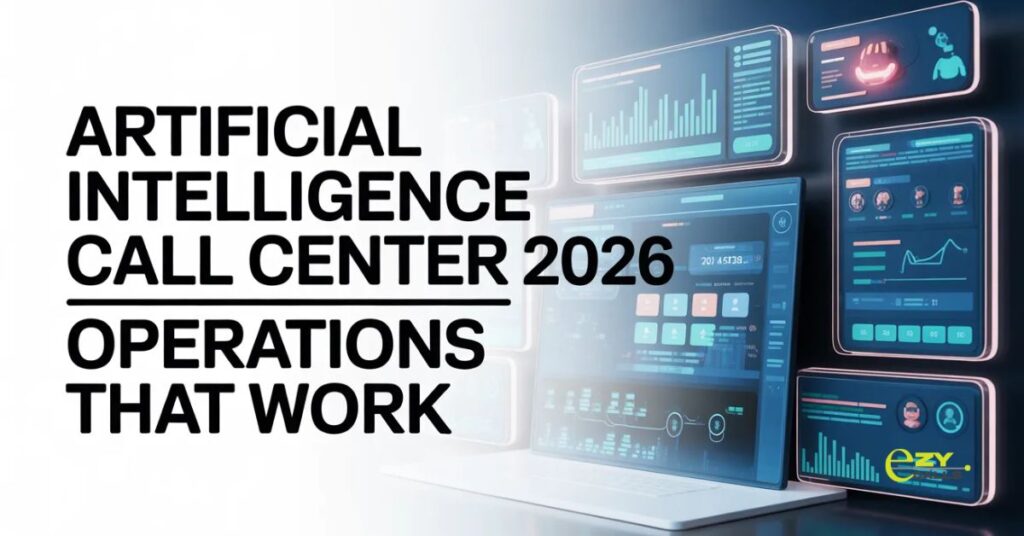
AI in call centers shouldn’t mean replacing humans with robots. Real AI assists agents, automates routine tasks, identifies problems early. Artificial intelligence call center 2026 operations work when technology enhances human capabilities instead of trying to eliminate them, and companies getting this right see better service at lower cost without sacrificing quality.
Most call centers approach AI as complete workforce replacement. Wrong goal leading to customer frustration and failed implementations.
What AI Actually Does
- Traditional call centers rely purely on human effort. Every call answered by a person, every decision made by an agent, every pattern recognized through experience.
- Artificial intelligence call center 2026 operations augment humans with smart automation. AI handles predictable work, agents focus on complex situations. Technology processing routine, people applying judgment.
- Collaboration between AI and humans beats either working alone.
Where AI Helps Operations
- Routine inquiry automation reduces volume. Simple questions like hours or account balance answered instantly. Agents freed for calls needing human touch.
- Real-time agent assistance during calls. AI suggests responses, pulls relevant information, flags procedures. Copilot helping agents perform better.
- Quality monitoring scales infinitely. AI reviews every conversation identifying coaching opportunities. Supervisors focus on development not just listening to calls.
- Predictive staffing optimization. Forecast call volume based on patterns. Schedule appropriately without guessing or overstaffing.
- Customer sentiment detection. AI recognizes frustration or satisfaction in real-time. Intervene before situations escalate.
- Knowledge base intelligence. AI understands intent to find relevant information. Faster answers than agents manually searching.
Different AI Applications
- Virtual agents handling tier-one support. Chatbots and voice bots managing basic inquiries. Humans handling escalations and complex issues.
- Agent augmentation improves performance. AI provides suggestions and information during calls. Technology supports not replacing people.
- Workforce management optimization. AI forecasting demand, suggesting schedules, balancing workload. Data-driven staffing decisions.
- Quality assurance automation. Every call is analyzed for compliance and performance. Consistent evaluation at scale.
- Customer experience personalization. AI remembering preferences, anticipating needs, routing appropriately. Individual treatment is impossible manually at scale.
- Training and coaching insights. AI identifying skill gaps, suggesting improvements, tracking development. Targeted coaching based on data.
Making AI Work Right
- Start with specific problems. Don’t implement AI everywhere at once. Target clear pain points with appropriate technology.
- Keep humans in a decision loop. AI suggests, people verify. Don’t blindly trust automated decisions affecting customers.
- Measure actual impact objectively. Track metrics before and after AI. Prove value with results not assumptions.
- Agent training on working with AI. Understanding suggestions, knowing when to override, leveraging capabilities properly. Technology only helps when used well.
- Continuous improvement from feedback. AI isn’t set-and-forget. Ongoing refinement based on results and team input.
- Transparency with customers. People deserve knowing when interacting with AI. Honesty builds trust better than deception.
Common AI Mistakes
- Expecting AI to solve everything. Technology has limits. Human judgment is still essential for complex situations.
- Poor data quality undermining AI. Garbage in, garbage out applies hard. Clean accurate data necessary for useful AI.
- Implementing without agent buy-in. Forcing technology on a resistant team guarantees failure. Involve agents in selection and rollout.
- Over-automation frustrating customers. Forcing everyone through AI when they want humans. Easy escalation path essential.
- Measuring wrong metrics. Celebrating cost savings while customer satisfaction drops. Balance efficiency with quality.
- Ignoring bias in AI decisions. Systems trained on historical data inherit biases. Monitor for unfair treatment patterns.
Integration Requirements
- CRM connectivity essential. AI needs customer context to make intelligent decisions. Isolated systems limit effectiveness.
- Knowledge base integration. AI pulling information from documentation. Accuracy requires a current complete knowledge repository.
- Communication platform APIs. AI working within existing call systems. Separate disconnected tools don’t help operations.
- Analytics and reporting systems. AI insights feeding business intelligence. Data visibility across organizations.
- Workforce management tools. AI forecasts integrating with scheduling. Coordination between prediction and planning.
Building AI-Augmented Teams
- Redefine agent roles around AI. Focus on complex interactions, relationship building, problem solving. Let AI handle routine.
- Train agents on AI collaboration. How to leverage suggestions, when to override, understanding AI capabilities and limits.
- Adjust performance metrics appropriately. Measure outcomes not just activity. AI changes what agents can accomplish.
- Create feedback loops. Agents reporting AI mistakes or successes. Continuous improvement through frontline input.
- Recognize AI adoption successes. Celebrate effective use of technology. Positive reinforcement building commitment.
- Address job security concerns honestly. AI augments jobs not eliminates them. Clear communication about role evolution.
Customer Experience Considerations
- Transparent about AI interactions. Customers know when talking to AI versus humans. Honesty prevents frustration from false expectations.
- Easy path to human help. Customers stuck with AI reach people quickly. No forcing people through automation mazes.
- Consistent experience across channels. AI personality matching human agent tone. Seamless transition between automated and human.
- Privacy protection with AI processing. Customer data handled securely. Clear policies about AI data usage.
- Quality standards applying to AI. Same service expectations for automated and human interactions. Technology doesn’t excuse poor service.
Future of AI in Call Centers
- AI handling more complex scenarios gradually. Technology is constantly improving. But human judgment remains essential.
- Voice AI becoming more natural. Conversations feeling less robotic. Improved natural language understanding.
- Predictive customer service emerging. AI anticipating needs before customers contact. Proactive outreach preventing issues.
- Emotional intelligence improving. AI better recognizes and responds to emotional states. Still limited compared to humans though.
- Integration across business systems. AI connecting call centers to broader operations. Holistic customer view and coordinated actions.
EZY CALLS AI Integration
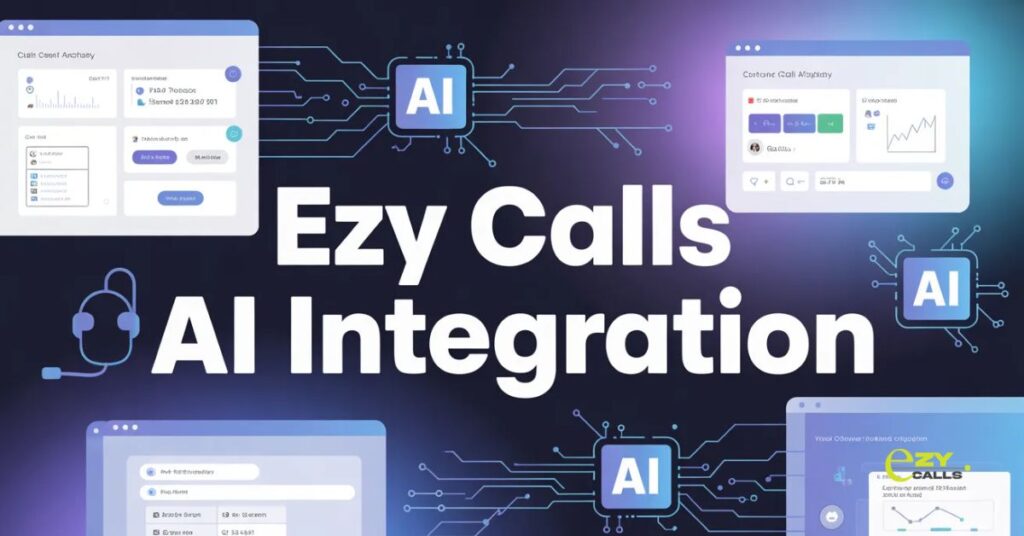
- Platforms like Ezy Calls implement practical AI solving real call center problems. Not theoretical capabilities, features improving daily operations measurably.
- What makes Ezy Calls effective? AI focused on agent assistance and customer experience. Learning from your conversations, not generic training. Built for operations wanting intelligence enhancing service not replacing people.
- For call centers needing AI benefits without complexity, solutions like this deliver. Practical intelligence improving operations without overwhelming users or customers.
- Artificial intelligence call center 2026 operations succeed through appropriate AI deployment. Good AI makes agents more effective and customers happier. Bad AI frustrates everyone trying to replace human judgment.
- Better operations combine AI efficiency with human empathy. Technology handling what it does well, people doing what they do best.
Questions About AI Centers
Will AI eventually replace all call center jobs?
- Nope, human judgment and empathy remain essential. AI handles routine work, people manage complex emotional situations. Job roles evolve but don’t disappear. Demand for skilled agents actually increases.
How long before AI in a call center shows results?
- Basic automation like chatbots shows value within weeks. Complex AI like quality monitoring takes months of training properly. Set realistic expectations based on specific AI applications deployed.
What happens when AI makes mistakes with customers?
- Agents should catch and correct before reaching customers. Good systems allow easy override. Track mistakes improving AI over time. Never blame technology for poor service, that’s management responsibility.