AI and Customer Service The Relationship Evolution
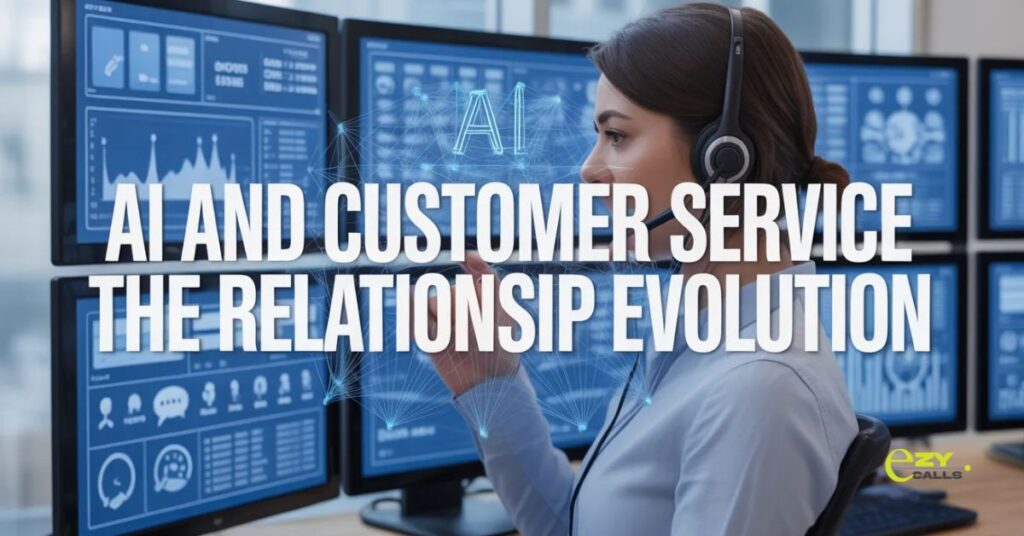
Customer service and AI aren’t enemies fighting for territory. They’re partners when combined correctly. AI and customer service relationships work best when both play to strengths, technology handling speed and scale, humans providing empathy and judgment, and companies understanding this partnership deliver better experiences than either alone could manage.
Most debates frame AI versus customer service. Wrong framing creates false choices between efficiency and quality.
The Partnership Framework
- Traditional view sees AI replacing customer service. Cheaper automation instead of expensive humans. Cost reduction driving decisions.
- Better view sees AI enhancing customer service. Technology enables better human performance. Quality improvement driving decisions.
- AI and customer service succeeding together requires reframing from replacement to partnership. Complementary strengths not competing alternatives.
- How you think about the relationship determines implementation success.
What Each Does Best
- AI excels at consistency and availability. Same answer every time, works 24/7, never gets tired. Reliability through automation.
- Humans excel at adaptation and empathy. Handle unexpected situations, understand emotions, and build relationships. Flexibility through judgment.
- AI processes data instantly. Search knowledge bases, retrieve information, calculate solutions. Speed through computation.
- Humans solve problems creatively. Invent workarounds, make exceptions, find novel approaches. Innovation through thinking.
- AI scales without limit. Handle thousand requests simultaneously. Volume through technology.
- Humans build trust individually. Create connections, establish rapport, earn loyalty. Depth through interaction.
Redefining Service Roles
- Tier-one becomes AI territory. Common questions, basic troubleshooting, information lookup. Automation where it works.
- Tier-two becomes human focus. Complex problems, frustrated customers, judgment calls. People where they matter.
- Hybrid tier emerges. AI assisting humans during interaction. Technology enhancing not replacing.
- Proactive service gets AI-enabled. Predicting issues, reaching out early, preventing problems. Data-driven prevention.
- Relationship management stays human. Account development, strategic partnerships, high-value clients. Personal touch preserved.
Training Teams For Partnership
- Agents learning to leverage AI. Using suggestions effectively, knowing when to override, maximizing technology benefits. AI literacy building.
- Understanding AI limitations. What it can and can’t do. Realistic expectations prevent frustration.
- Developing uniquely human skills. Empathy, creativity, relationship building. Capabilities AI can’t replicate.
- Comfort with technology assistance. Seeing AI as helpful not threatening. Mindset shifts from competition to collaboration.
- Feedback loops for improvement. Reporting AI successes and failures. Continuous refinement through frontline input.
Customer Perspective Shift
- Accepting AI for appropriate scenarios. Quick questions, simple tasks, instant needs. Efficiency when it helps.
- Expecting humans when needed. Complex problems, emotional situations, important decisions. Quality when it matters.
- Seamless transitions between AI and human. Smooth handoffs without frustration. Experience continuity across interaction.
- Transparency about who’s helping. Clear whether talking to AI or person. Trust through honesty.
- Consistent quality regardless. Same standards for AI and human service. Technology not lowering expectations.
Evolution Over Time
- Year one focuses on basics. Simple automation, clear boundaries, human backup always available. Foundation building carefully.
- Year two expands capabilities. More complex scenarios, better handoffs, improved AI learning. Confidence from success.
- Year three optimizes partnership. Seamless collaboration, proactive service, continuous improvement. Maturity through experience.
- Long-term sees natural integration. Technology and humans working together effortlessly. Partnership becoming normal not novel.
- Evolution happens gradually. Rushing causes failures, patience enables success.
Measuring Partnership Success
- Combined metrics matter most. Overall resolution rates, total satisfaction scores, complete cost picture. Holistic view.
- AI performance tracked separately. Resolution without human help, accuracy rates, escalation patterns. Technology assessment.
- Human performance is measured differently. Complex issue resolution, customer relationships, innovation. People evaluation.
- Handoff quality monitored. Smooth transitions, context preservation, minimal repetition. Integration effectiveness.
- Team satisfaction considered. Agent happiness with tools, stress levels, job fulfillment. People experience matters.
Common Partnership Failures
- Treating AI as agent replacement. Head-count reduction driving deployment. Wrong goal creating wrong implementation.
- Insufficient human involvement. AI doing too much without backup. Customers stuck without help.
- Poor handoff execution. AI to human transitions feeling broken. Frustration from poor coordination.
- Ignoring team concerns. Agents worried about jobs. Fear prevents effective collaboration.
- Measuring wrong outcomes. Only efficiency metrics. Quality and satisfaction ignored.
Technology Enabling Partnership
- Integrated platforms connecting AI and humans. Same system for both. Seamless transitions through unified tools.
- Context preservation across interactions. AI collecting information, humans receiving it. Continuity prevents repetition.
- Real-time collaboration features. AI assisting during human conversations. Partnership happening simultaneously.
- Learning systems improve both. AI from patterns, humans from AI insights. Mutual enhancement.
- Analytics showing combined performance. Technology and people metrics together. Partnership visibility.
Cultural Change Requirements
- Leadership supporting partnership model. Not replacement rhetoric. Genuine collaboration messaging.
- Team involvement in AI development. Agents helping train systems. Ownership through participation.
- Celebrating successful collaboration. Recognizing effective AI-human teamwork. Positive reinforcement.
- Addressing fears openly. Job security, role changes, skill development. Honest communication.
- Rewarding partnership behaviors. Using AI well, providing good feedback, teaching others. Incentivizing collaboration.
EZY CALLS Partnership Approach
- Platforms like Ezy Calls design for AI-human collaboration. Not replacing agents. Technology supports people effectively.
- What makes Ezy Calls different? Focus on partnership not replacement. Easy handoffs, agent assistance, continuous improvement together. Built for teams where technology and humans work together.
- For companies wanting AI benefits while keeping human value, solutions like this work. Partnership design not elimination strategy.
- AI and customer service relationship succeeds through genuine partnership. Good integration makes both more effective. Bad integration creates conflict and poor results.
- Better service comes from AI and humans playing complementary roles. Technology providing capabilities people lack, people providing qualities technology can’t replicate.
Questions About Partnership
How do we convince team AI helps not threaten them?
- Show real examples where AI made their jobs easier. Involve them in implementation decisions. Address concerns honestly and demonstrate commitment to their roles.
What if AI and human service quality feels inconsistent?
- Set the same standards for both. AI not excusing poor service. If quality inconsistent, improve AI or limit its scope until it meets standards.
How long until AI-human partnership feels natural?
- Usually six months to year. Initial awkwardness fades with familiarity. Teams adapt to collaboration gradually as benefits become clear and processes smooth out.