Artificial Intelligence Call Center Software That Actually Helps
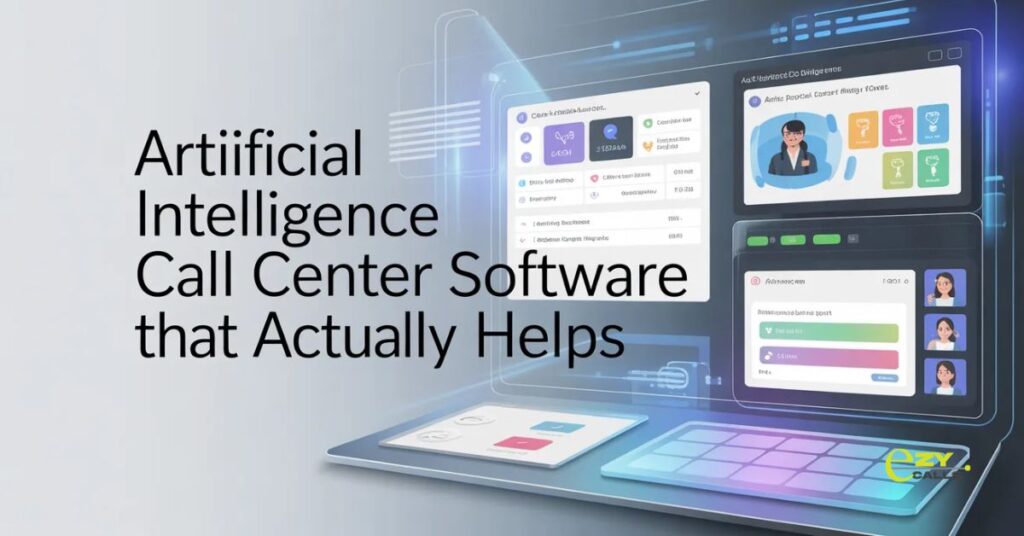
AI in call centers shouldn’t just be a marketing buzzword. Real AI solves actual problems like handling routine calls, detecting customer frustration, suggesting responses. Artificial intelligence call center software works when it makes agents more effective not when it sounds impressive in sales presentations, and companies using it right see measurable improvements not just futuristic features.
Most vendors slap “AI-powered” on basic software hoping nobody asks what AI actually does. Real intelligence versus rebranded automation matters.
What Real AI Does
- Traditional call center software follows programmed rules. If a customer says X, do Y. Simple decision trees have nothing intelligent about it.
- Artificial intelligence call center software learns and adapts. Understands natural language, recognizes patterns, improves from experience. Actually intelligent behavior is not just complicated programming.
- The difference between rules-based automation and genuine learning systems changes what’s possible.
Where AI Actually Helps
- Call routing gets smarter continuously. AI learns which agents handle which issues best. Routes customers based on patterns not just availability.
- Response suggestions improve over time. AI watches successful conversations. Suggests proven approaches to current situations.
- Customer sentiment detection happens automatically. AI hears frustration in voice or detects it in text. Flags issues before they escalate.
- Knowledge base searches become intelligent. AI understands intent, not just keywords. Finds relevant information faster than manual searching.
- Quality monitoring scales infinitely. AI reviews every conversation identifying coaching opportunities. Human supervisors handle exceptions, not routine reviews.
- Predictive analytics forecast call volume. Historical patterns plus current trends. Staff appropriately without guesswork.
AI Features Worth Having
- Natural language understanding for customer input. Comprehends what people mean, not just exact words. Handles different phrasings of the same question.
- Conversation analysis revealing patterns. Identifies common issues, successful resolution approaches, trending problems. Insights from aggregate data.
- Real-time agent assistance during calls. Suggests responses, pulls relevant information, flags procedures. Helpful copilot not replacement.
- Automated quality scoring consistently. Evaluates calls against criteria objectively. Fair assessment without supervisor bias.
- Intent recognition routing efficiently. Understands why the customer called. Directs appropriately before long explanations needed.
- Continuous learning from outcomes. Tracks what worked, incorporates lessons into future suggestions. Gets smarter with every interaction.
Different AI Applications
- Customer self-service handling simple requests. AI chatbots and voice bots managing routine inquiries. Humans handle complex situations requiring judgment.
- Agent augmentation improves performance. Real-time suggestions helping agents respond effectively. Technology supports not replacing people.
- Quality management at scale. Every conversation is analyzed automatically. Supervisors focus on coaching not reviewing.
- Workforce optimization predicting needs. Forecast volume, suggest schedules, balance workload. Data-driven staffing decisions.
- Customer experience personalization. AI remembers preferences, anticipates needs, tailors interactions. Individual treatment at scale.
Making AI Work Right
- Start with clear problems AI should solve. Don’t implement AI for AI’s sake. Target specific pain points with appropriate technology.
- Quality data feeds AI effectiveness. Clean accurate information teaches good patterns. Garbage data produces useless AI.
- Human oversight remains essential. AI suggests, people verify. Don’t blindly trust automated decisions affecting customers.
- Measure actual impact objectively. Track metrics before and after AI. Prove value with results not assumptions.
- Agent training on working with AI. Understanding suggestions, knowing when to override, leveraging capabilities. Technology only helps when used properly.
- Continuous refinement based on feedback. AI isn’t set-and-forget. Ongoing tuning improves performance over time.
Common AI Misconceptions
- AI won’t replace all agents tomorrow. Handles routine work, assists with complex. Human judgment and empathy are still necessary.
- More AI features don’t mean better results. Focused AI solving specific problems beats generic “AI everything.” Quality over quantity matters.
- AI doesn’t work perfectly immediately. Learning takes time and data. Early performance might disappoint before improving.
- Every problem doesn’t need an AI solution. Sometimes simple automation suffices. Don’t overcomplicate with unnecessary intelligence.
- AI understands everything customers say. Nope, still struggles with accents, slang, unclear phrasing. Limitations exist despite marketing claims.
Implementation Challenges
- Data preparation requires significant effort. Historical conversations need formatting for AI training. Time investment before seeing benefits.
- Agent skepticism about AI assistance. Fear of replacement or distrust of suggestions. Change management critical for adoption.
- Integration with existing systems varies. Connecting AI to current call center infrastructure is sometimes complicated technically.
- Cost justification before proven value. AI features command premium pricing. ROI unclear until actually using it.
- Ongoing maintenance and training needs. AI requires continuous feeding of new data. Not a one-time implementation project.
Avoiding AI Hype
- Question vendor claims specifically. “What does your AI actually do?” Generic answers hide limited capability.
- Request demonstrations with real scenarios. Not canned demos with perfect data. Test with your actual messy customer interactions.
- Check customer references about AI performance. Real users reveal the truth about capabilities. Marketing says everything works perfectly.
- Start with trial testing thoroughly. Use AI features with actual calls. See if benefits match promises before committing.
- Compare AI costs versus simpler solutions. Sometimes basic automation solves problems cheaper. AI premium must deliver proportional value.
Security and Privacy Considerations
- AI processing customer conversations raises privacy concerns. Ensure the vendor handles data appropriately with proper security.
- Compliance with regulations like GDPR. AI decisions affecting customers need transparency and explainability. Black box algorithms create regulatory risks.
- Data storage and retention policies. Where does conversation data live? How long has it been kept? Who accesses it?
- Bias in AI decision-making. Systems trained on historical data inherit biases. Monitor for unfair treatment patterns.
- Customer consent for AI interactions. People deserve knowing when talking to AI versus humans. Transparency builds trust.
EZY CALLS AI Integration
- Platforms like Ezy Calls implement practical AI solving real call center problems. Not theoretical capabilities, actual features improving daily operations.
- What makes Ezy Calls effective? AI focused on agent assistance and quality improvement. Learn from your conversations, not generic training. Built for operations wanting intelligence without complexity.
- For call centers needing AI benefits without data science teams, solutions like this deliver. Practical intelligence improving service without overwhelming users.
- Artificial intelligence call center software succeeds when it delivers measurable improvements. Good AI makes agents more effective and customers happier. Bad AI is just expensive automation with fancy names.
- Better service comes from appropriate AI solving real problems. Intelligence should enhance human capabilities, not just impress with technology.
Questions About AI
How do we know if AI features actually work or just marketing?
- Test during trials with your real calls. Good AI shows measurable improvements – faster handling, better resolution, higher satisfaction. Generic claims without proof mean weak AI.
Will AI replace our customer service team?
- Nope, AI handles routine stuff and assists with complex. Emotional situations, unusual problems, relationship building still need humans. Technology augments not replaces people.
What happens when AI gives wrong suggestions to agents?
- Agents should always verify before using. Good systems let people override easily. Track wrong suggestions improving AI over time through feedback.