
Best Omnichannel Call Center Setup for Growing Businesses
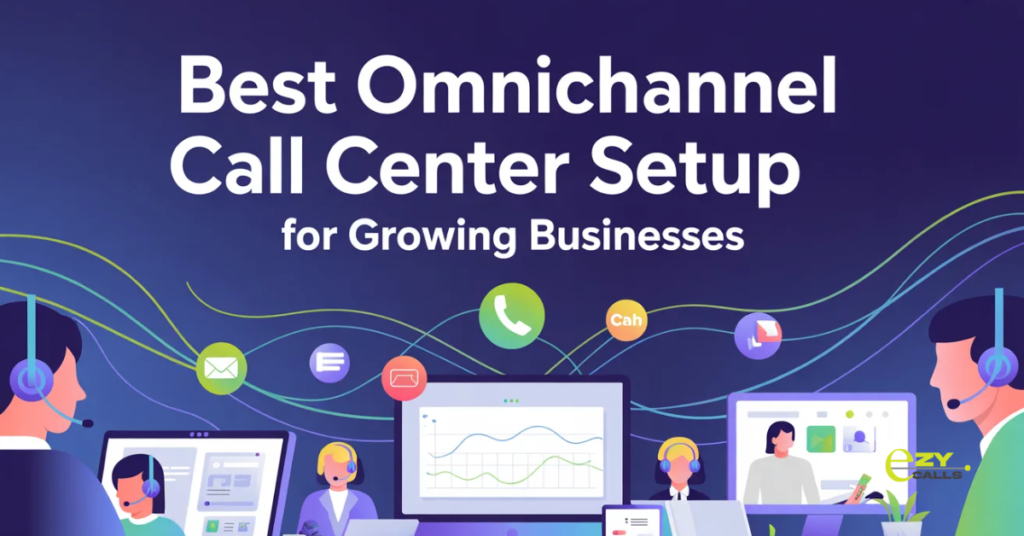
- Customers do not think about channels. They think about getting help. Whether they reach out by phone, send a message through chat, email with a question or contact through social media they are doing the same thing from their perspective. Trying to get something sorted with a business they have a relationship with.
- The operational reality behind that simple customer intention is more complicated. Phone systems. Chat platforms. Email queues. Social media monitoring. Each channel has historically required its own infrastructure, its own team and its own processes. The customer who switches from chat to phone to resolve an issue they started online encounters the seams between those systems in ways that create frustration rather than resolution.
- A best omnichannel call center setup removes those seams. Not by making every channel identical but by ensuring that the context a customer has established in one channel follows them to another and that the team managing all of them has a coherent picture rather than separate queues that never properly connect.
What Omnichannel Actually Means
- The term gets used loosely enough that it is worth being specific about what it actually means in a contact center context before evaluating how to achieve it.
- Multichannel is not omnichannel. A business that offers support through phone, chat and email is multichannel. If those channels are managed separately with separate queues, separate agent interfaces and no connection between customer histories across channels it is multichannel but not omnichannel. The customer who emailed yesterday and calls today is treated as a new contact rather than as a customer with an open issue.
- Omnichannel means the channels are connected in ways that make the customer experience continuous rather than episodic. The agent who picks up a phone call from a customer who previously chatted has access to what happened in the chat. The customer who moves from one channel to another does not need to restate their situation. The team managing all the channels has a single view of each customer’s contact history rather than separate records in separate systems.
- Best omnichannel call center operations achieve this continuity in practice rather than just describing it as a capability.
The Channels That Matter Most
- Not every business needs to be omnichannel across every possible contact channel. The channels worth investing in are the ones customers actually use to contact the specific business rather than the ones that appear in comprehensive omnichannel definitions.
- Voice remains the highest stakes channel for most businesses. Customers reach for the phone when something genuinely matters to them. When a problem feels serious enough that a message does not feel sufficient. When they need to speak to a person rather than exchange text. Voice contacts tend to be more emotionally charged and more consequential than contacts through other channels.
- Chat has become the primary channel for customers who prefer not to make a phone call and for contacts where the customer needs to refer to information while communicating. The real time nature of chat means customers expect quick responses even if they are willing to wait longer than they would on a phone call. Chat also lends itself to AI handling of routine contacts in ways that voice is beginning to but has not yet fully matched.
- Email serves contacts that are not time sensitive but that require detailed explanation or documentation. Customers who need to send attachments. Contacts that require a considered written response rather than a live exchange. The response time expectations for email are longer than for chat or voice but the expectation of completeness and accuracy is higher.
- Messaging through WhatsApp, SMS and similar platforms has grown significantly as a customer service channel particularly for businesses whose customers are already using these platforms for personal communication. The asynchronous nature of messaging suits contacts that do not require immediate resolution and the familiarity of the interface reduces the friction of initiating contact.
What the Technology Needs to Deliver
- Best omnichannel call center technology that actually delivers connected experiences rather than connected channel claims shares consistent capabilities that are worth evaluating specifically.
- Unified customer profile that is visible across all channels. When a customer contacts through any channel the agent or AI system handling that contact sees the full history of previous interactions regardless of which channel they happened through. Not a separate history per channel but a single chronological record of every contact.
- Contextual handover between channels. When a customer switches channels the context of what has already happened follows them. An agent picking up a phone call from a customer who has been chatting does not ask the customer to explain the situation again. The chat history is visible and the agent picks up from where the conversation left off.
- Unified queue management that balances demand across channels based on agent availability and skills rather than routing all voice contacts to voice agents and all chat contacts to chat agents regardless of where capacity exists. This flexibility requires agents who can handle multiple channels and technology that manages the routing intelligently.
- Consistent AI handling across channels. The same AI capability applied across voice, chat and messaging so that routine contacts are handled automatically regardless of which channel they arrive through and the threshold for escalation to a human is consistent.
- Unified reporting that shows contact center performance across all channels in a single view rather than separate reports that need to be manually reconciled to understand overall performance.
The AI Layer in Omnichannel Operations
- AI has become central to how best omnichannel call center operations manage the volume that omnichannel generates alongside the quality that customers expect.
- The challenge of omnichannel is that being available across more channels generates more contacts. A business that adds chat and messaging to an existing voice operation does not simply distribute existing contact volume across more channels. It generates additional contacts from customers who would not have called but will message or chat.
- AI handling of routine contacts across all channels is what makes the additional volume manageable without proportionally expanding the human team. The same account query that arrives by voice, chat and email gets handled automatically through each channel without consuming agent capacity on contacts that do not require human judgment.
- The AI that works in chat does not automatically work in voice. Different channels require different AI approaches because the interaction patterns are different. Chat interactions allow for slightly longer processing time and are more tolerant of structured response formats. Voice interactions require faster processing and natural sounding language. Email interactions can be longer and more comprehensive. Building AI capability channel by channel rather than assuming a single AI approach serves all channels equally well produces better customer outcomes.
The Agent Experience in an Omnichannel Environment
- The agent experience in an omnichannel contact center is more complex than in a single channel environment and addressing that complexity is what determines whether the omnichannel model actually delivers on its promise.
- Agents who handle multiple channels need a unified interface that shows all their queued contacts regardless of channel in a single view. Switching between separate applications for voice, chat and email creates cognitive overhead that reduces the quality of handling across all of them. A single agent desktop that surfaces the next contact from whichever channel it arrives through, with the customer history and the relevant context visible, allows agents to focus on the customer rather than on managing the technology.
- Training for omnichannel agents addresses the different communication styles that different channels require. The natural conversation flow of a voice call is different from the more structured exchanges of chat. The completeness and tone appropriate for email is different from both. Agents who are effective across channels have developed the ability to switch between these styles rather than applying the same approach to every channel.
- The supervision of omnichannel agents requires visibility across all channels simultaneously rather than monitoring one channel at a time. A supervisor who can only see voice interactions in real time is blind to how the same agents are handling chat and email contacts that are happening simultaneously.
Building the Right Omnichannel Stack
- Best omnichannel call center operations are built on technology choices that connect channels genuinely rather than claiming connection through separate systems that share a brand name without sharing customer data.
- The distinction between a genuinely unified platform and a collection of separate channel tools marketed as omnichannel matters enormously for whether the customer experience is actually continuous. Platforms that started as voice systems and added chat and email as separate modules often do not share customer data between those modules in real time. The omnichannel claim is technically accurate but the customer experience is not genuinely connected.
- Platforms built from the ground up with omnichannel as the design principle rather than as an addition to an existing single channel product deliver more coherent experiences because the customer data model was designed to connect channels from the start rather than retrofitted to do so.
- The integration between the contact center technology and the CRM determines how much of the customer relationship context is available during interactions. A customer whose full account history, previous issue resolution and known preferences are visible during every contact gets a genuinely personalised experience. One whose contact center history is separate from their CRM record gets a more fragmented one.
What Customers Actually Experience
- The test of a best omnichannel call center setup is not the technology that powers it or the operational metrics it produces. It is what customers experience when they contact the business.
- Customers who can switch channels without losing context experience a business that respects their time. Customers who receive consistent quality regardless of which channel they choose experience a business that has invested in serving them rather than in managing its own operational complexity. Customers who get through to the right help quickly regardless of the channel through which they arrive experience a business that has thought about their journey rather than just its own processes.
- These are the outcomes that build the kind of customer loyalty that shows up in retention rates, referral rates and lifetime value rather than just in post interaction satisfaction scores.
- EZY CALLS is a platform built for businesses that want to build omnichannel customer support that actually delivers those outcomes. Designed around the customer journey across channels rather than around the operational convenience of managing each channel separately.
Questions Worth Asking
How do we prioritise which channels to add when moving toward omnichannel?
- Start with the channels customers are already trying to use that the business is not currently serving well. Customer frustration about channel availability is a clearer signal than assumptions about which channels should be offered.
How do we maintain quality across channels when different channels require different communication styles?
- Build channel specific quality criteria alongside shared ones. Some quality standards apply equally across all channels. Others need to reflect the specific conventions and expectations of each channel.
How do we measure whether our omnichannel setup is actually connected or just multichannel with a different label?
- Track what proportion of contacts that switch channels require the customer to restate their situation. A genuinely connected omnichannel setup produces a very low rate of channel switching that requires context repetition. A multichannel setup labelled as omnichannel produces a high one.
